The Layers Beneath Us
History is not behind us but beneath us. Every generation builds on layers left by those before it, carrying inherited struggles, freedoms and memories into an unfinished conversation about the future.
On history, hope, and the unfinished conversation beneath our feet
Author’s note: on hope, horizon, and the weight beneath our feet
I have always believed that to move forward, we must know what we are standing on.
The world changes - its forms, its rhythms, its alliances - but the ground beneath us remains full of voices. Beneath every reform lies an older dream; beneath every innovation, an inheritance.
The future, for me, is not an escape from history but its next chapter. Hope is not born from amnesia but from recognition - the awareness that the human story has survived darker centuries and still dared to imagine light.
We need innovation, yes, but innovation that knows where it began; progress that carries the echo of what was once sacred; a new architecture built on solid foundations, not rubble.
Our century asks for vision - long-term, stable, and generous enough to offer both prosperity and meaning. But such a vision cannot be built by those who forget. The past does not ask for worship, only respect: to be handled like an old instrument whose resonance can still guide the melody of tomorrow.
To write about history, then, is to write about hope. Because every lesson we keep alive is a horizon we refuse to lose.
The Unfinished Conversation
History is not a closed book; it is a conversation that refuses to end.
Its participants change - kings, revolutionaries, citizens, machines - but the dialogue goes on, carried by the living who inherit both the glory and the guilt of those before them.
We imagine history as something behind us, but it is beneath us. Each era lays a brick on what came before, sometimes without noticing the weight it carries. The city of today rests on invisible foundations - revolutions turned into rights, inventions turned into daily tools, tragedies turned into lessons half learned.
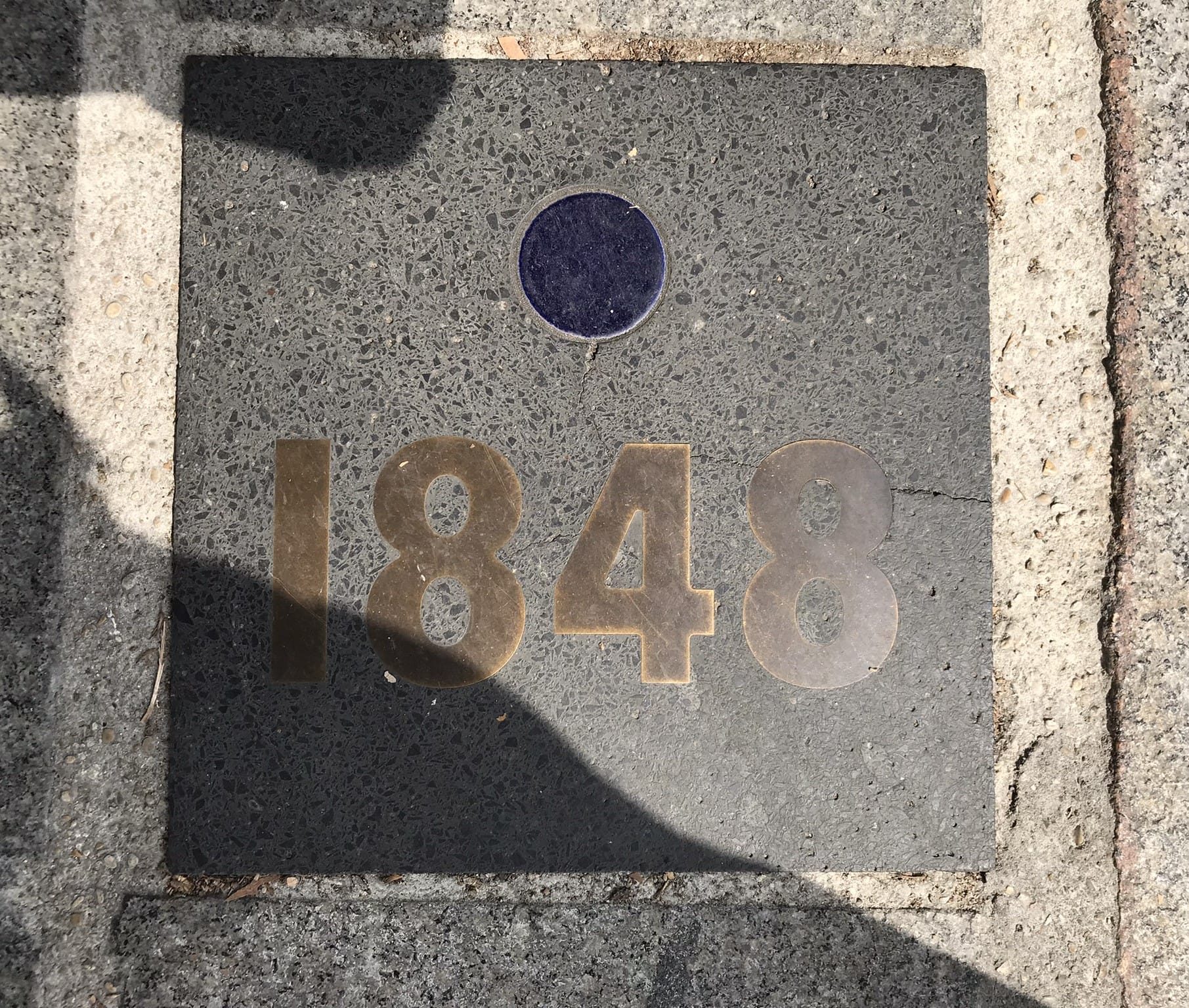
To walk through Europe is to feel this weight under your feet: Roman stones under glass floors, Gothic vaults beside glass towers, borders that once killed now crossed by trains and students. Every step is a quiet act of remembrance. We are never walking alone.
Respect for history does not mean living in its shadow. It means building with care upon its structure - keeping what holds, mending what cracks, and daring to add a new layer that will one day support others. Too often we mistake demolition for renewal. Yet a society that forgets its skeleton collapses under the illusion of novelty.
The true dialogue between past and present is not sentimental. It is structural.
Yesterday still speaks, but not to be worshipped. It speaks to warn, to question, to remind us of our unfinished tasks: justice, equality, the dignity of the human being. Its words are written not only in books but in streets, institutions, and even silences.
When we stop listening, we repeat.
When we listen too reverently, we stagnate.
Respect lies in the balance - in treating history not as a monument but as a mentor, an interlocutor who challenges us to mature.
Our world, impatient and accelerated, often behaves as if it were the first to exist. We speak of revolutions as if time began with us. Yet everything new is a reformulation of something ancient: freedom reborn, solidarity rediscovered, technology echoing the age-old wish to overcome limits.
To be modern, truly modern, is to understand how deep our roots reach. The new brick needs the old wall; the melody needs the instrument.
Progress is not rebellion against the past, but its continuation under different light.
Perhaps that is why history still moves us - because we recognize ourselves in its unfinished sentences.
We are not the conclusion. We are the continuation.
Each decision we take - in Democracy, in solidarity, in how we treat one another - is another line in that ongoing dialogue between what was and what might be.
History is never finished. It only pauses long enough for us to answer.